How risk changes as you approach retirement
Your super is invested through your working years and your retirement. Investment risk does not disappear once you retire. It just changes shape.


Your super is invested through your working years and your retirement. That matters, because investment risk does not disappear once you retire. It just changes shape.
While you’re building your balance, you’re usually chasing growth. But once you hit retirement, your priorities shift. You still want growth, but you’re also starting to draw money out. That’s a delicate dance – influenced by the decisions you make as well as what happens in investment markets.
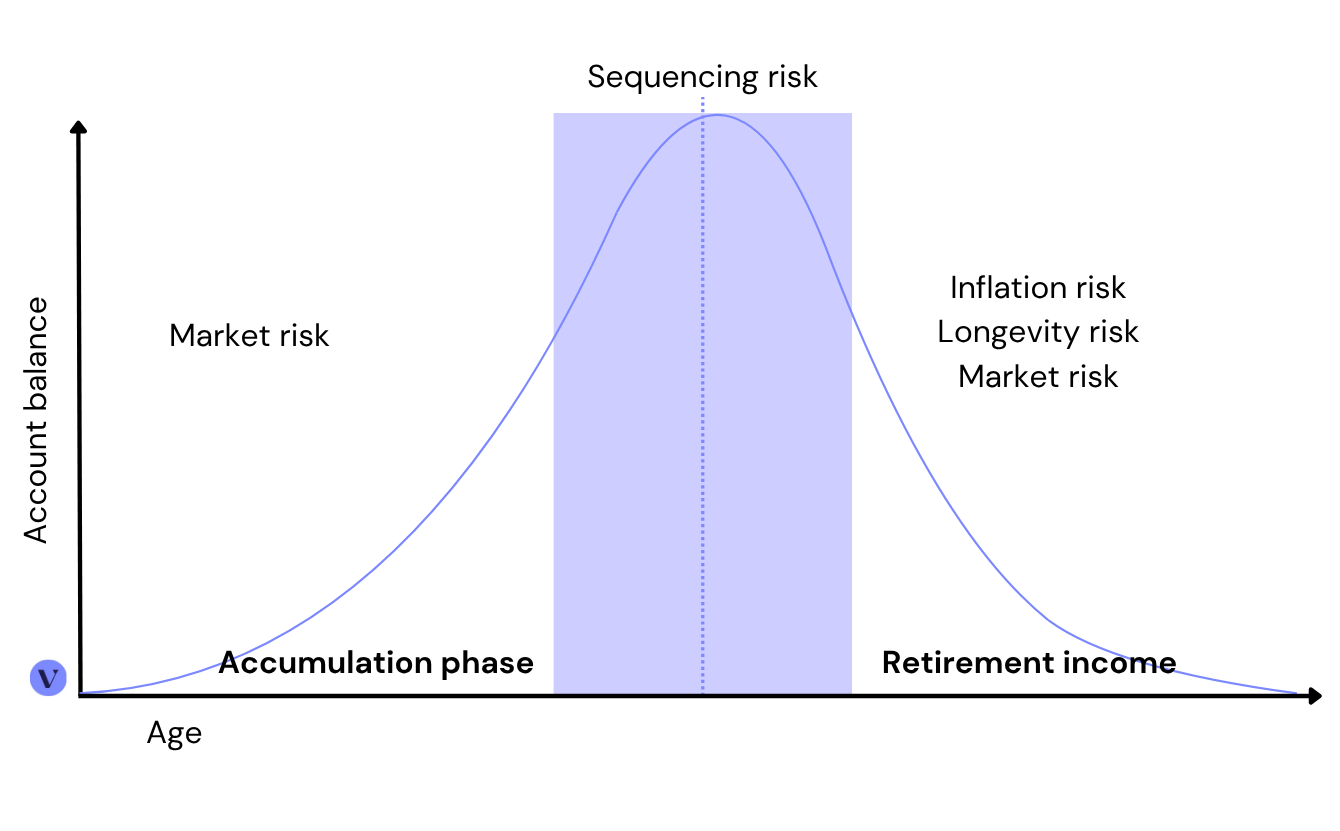
Here are four key risks that become extra important as you near retirement. They're worth getting to grips with – not only when it is time to retire, but also in the planning phase.
The key risks to understand
1: Market risk
How much uncertainty can you take?
Markets rise and fall due to world and business events. Those ups and downs are called volatility. If you’re in a growth or high growth investment option, you can expect to feel these ups and downs more than someone in a defensive option, because you hold more assets that can move sharply in price.
Your personal risk tolerance is about how you handle those swings. Some people are fine with short-term drops if it means higher growth over time. Others want less drama – even if that means lower returns.
There is no 'right’ risk tolerance level. But time matters. When you’re younger, your super has more time to bounce back from dips, so more risk might be worth it to help your super grow. As retirement gets closer, protecting what you’ve built becomes more important. Because poor returns close to retirement can hit harder.
Let's go deeper.
2: Sequencing risk
Does the order of losses and gains matter?
Sequencing risk is the possibility that when your investment returns go up and down could impact your savings.
If markets drop just as you’re about to retire - or early in your retirement – and you’re withdraw regularly, your balance can shrink fast.
But if you get a few good years early on, you’ll have more runway.
This retirement risk is a big deal because you’re not just watching your investments and more, safely riding out volatility. You’re spending them. Sequencing risk also matters in the lead-up to retirement – when losses can also impact your retirement planning.
With many of us living 30+ years after retirement, every dollar counts.
3: Longevity risk
Will your savings last as long as you do?
It’s awesome that we’re living longer on average. But it means our money needs to last longer, too.
Longevity risk is the chance of living longer than your savings can support. Improvements in healthcare are awesome, giving us more years to enjoy chilling.
But a long retirement makes it more important to keep some growth exposure in your investments. Low-growth portfolios can struggle to stretch across decades.
Even in retirement, you may need a long-term mindset. It's about holding growth assets while managing risks – and protecting your balance, while also using your money.
4: Inflation risk
Will rising prices eat into your lifestyle?
Inflation gradually reduces your buying power. Over long periods, even modest inflation compounds to squeeze living standards. At a 2.5% inflation rate, something costing $50 today could cost $80 in 20 years.
That's why you need your investment to grow faster than inflation over time. Otherwise, its real value is going down. This is especially important when your income comes from savings, not wages.
Being too conservative for too long can leave retirees exposed to inflation risk, quietly eroding your quality of life. That’s why investing for retirement isn’t just about playing it safe – it's about playing it smart.
Choosing how to invest in retirement
Investing during retirement is full of trade-offs. There is no universal formula. The right mix for you depends on:
your lifestyle goals
debt and other assets
your comfort with volatility
your age and how long you expect to be retired
your super balance
your eligibility for the Age Pension
whether leaving a legacy is important to you
Some people want to lock in stability. Others are comfortable chasing more growth to support higher spending or a longer retirement. Many land somewhere between and streak their strategy over time.
Think of your retirement investing plan. Like a playlist – it evolves as the vibe shifts. Early on, you might focus on reducing sequencing risk and funding lifestyle changes. Later, you may value consistency and income more. The key? Stay intentional, and don’t be afraid to ask for help.

Where to get support
You don't have to figure this out alone. Access to Verve’s Coaches, including qualified financial advisers, are part of your Verve membership. They can help you build a strategy based on your age, balance, goals and risk comfort. Personalised advice matters. The same investment might suit one person but not another.
Good advice can reduce stress, build confidence, and help you avoid three two common traps:
Thinking retirement means zero risk. (Hello, inflation and longevity)
Assuming markets will play nice. (Remember that sequencing risk?)
Being nervous about spending your super. After all those years of saving, switching to spend mode is a big mental shift. Support helps.
What’s next: actions to take now
If retirement is on your radar, here are some smart next steps:
Check your current investment option. If you can’t remember why you chose it, that’s your cue to review.
Stress-test your risk tolerance. How would you feel if markets dropped suddenly? If the answer is “panicked,” it’s worth rethinking your setup – maybe with a qualified professional.
Plan ahead. Sequencing risk hits hardest not just when you retire, but also in the ten years before it.
Think long term. We’re talking decades, not years. Conservative might feel safe now, but could leave you exposed to inflation later.
Talk to a pro. This isn’t the time to wing it. Qualified advisers can show you how to shape the future you want.
Retirement isn’t a finish line – it's a whole new chapter. The closer you get, the more you understand how risk evolves, the better you can shape a future that works for you.
*Please note that Verve Super does not offer an account-based pension or transition to retirement pension product